

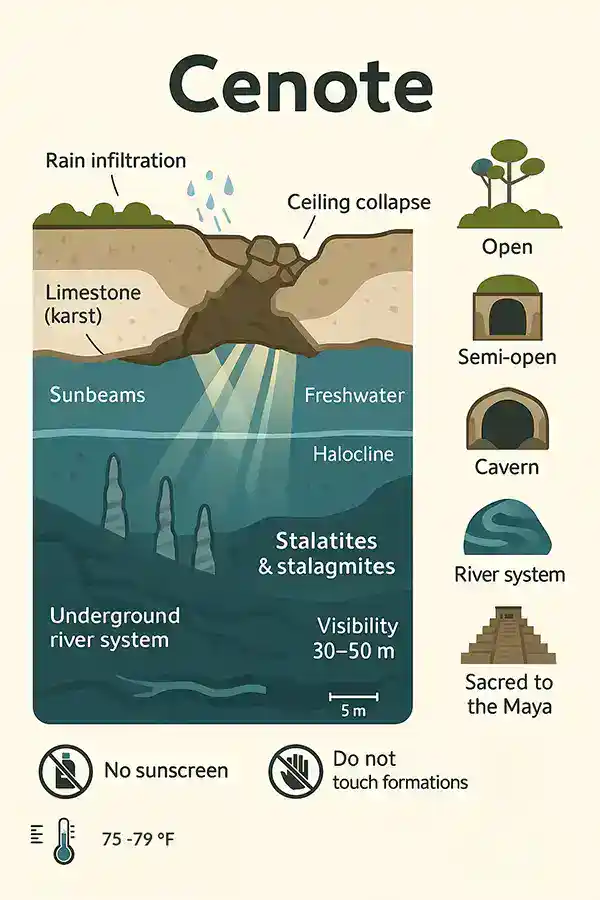
What is a cenote?
Cenotes are water-filled karst sinkholes—formed when limestone collapses and exposes underground rivers and caves. Widespread in the Riviera Maya/Yucatán, they can be open, semi-open, or cavern type.
Estimates vary, but the Yucatán Peninsula hosts roughly 6,000–10,000 cenotes, most of which aren’t open to visitors.
The water is exceptionally clear, with a stable temperature around 24–26 °C, creating dramatic beams of light that cut through the cave darkness. For the Maya, they were sacred places and vital freshwater sources.
For underwater photography, cenotes offer superb visibility, dark backdrops that make skin tones and fabrics stand out, stalactites, and protected environments with little to no current—ideal even for non-swimmers with proper assistance. Entry follows environmental rules (no sunscreen/repellent beforehand, don’t touch formations) and often involves authorized guides.
Awards

About us

Follow us on Instagram

Follow us on Facebook

Beachy Bride Certified